
Choosing the right substrate for alkaline phosphatase (ALP) detection is one of the most critical decisions when developing or optimizing an in vitro diagnostic (IVD) assay kit. The substrate directly determines assay sensitivity, dynamic range, signal stability, and overall kit performance. Among the various ALP substrates available, 4-Nitrophenyl Phosphate (p-NPP) has long been recognized as the gold standard for colorimetric ALP detection in clinical diagnostics and immunoassay development.
This guide provides a comprehensive overview of the key factors you should consider when selecting an ALP substrate for your IVD assay kit, with a special focus on p-NPP and its advantages.
Understanding the Role of ALP Substrates in IVD Assays
Alkaline phosphatase is one of the most widely used enzyme labels in immunoassays, including ELISA, chemiluminescence immunoassays, and enzyme-linked immunospot (ELISpot) assays. ALP catalyzes the dephosphorylation of substrate molecules, producing a detectable signal — either colorimetric, fluorescent, or chemiluminescent. The choice of ALP substrate directly impacts the signal-to-noise ratio, limit of detection, and reproducibility of the assay.
For colorimetric detection, 4-Nitrophenyl Phosphate (p-NPP) (CAS: 4264-83-9) is the substrate of choice. When hydrolyzed by ALP, p-NPP produces a yellow-colored product (4-nitrophenol) that can be measured at 405 nm using a standard microplate reader. This simple, reliable reaction mechanism makes p-NPP ideal for clinical diagnostic reagents used in hospital laboratories worldwide.
Key Factors to Consider When Choosing an ALP Substrate
When selecting an ALP substrate for your IVD assay kit, the following factors should be carefully evaluated:
1. Sensitivity and Detection Range
The sensitivity of the substrate determines the lowest concentration of ALP that can be reliably detected. High-Quality 4-Nitrophenyl Phosphate with 4-Nitrophenol content ≤0.07% and reaction rates (AP) of 95%–105% offers superior sensitivity with minimal background interference. For ALP-based ELISA applications, p-NPP provides a detection range spanning several orders of magnitude.
2. Purity and Batch-to-Batch Consistency
Table 1: Quality Specifications of IVD-Grade p-NPP (CAS 4264-83-9)
| Parameter |
Specification |
| Appearance |
White to yellowish crystalline powder |
| pH Value |
8–10 |
| Water (K. Fischer) |
25%–31% |
| 4-Nitrophenol |
≤0.07% |
| Na Content |
11.4%–13.4% |
| Pi (Free Phosphate) |
≤0.3% |
| Reaction Rate (AP) |
95%–105% |
| Molecular Formula |
C₆H₄NO₆PNa₂·6H₂O |
| Molecular Weight |
371.1 |
| Packaging |
100g, 500g, 1kg, 5kg, 10kg |
| Shelf Life |
24 months at 2–8°C |
For IVD kit manufacturers, batch-to-batch consistency is paramount. Inconsistent substrate quality leads to assay variability, failed lot releases, and increased production costs. High-Quality 4-Nitrophenyl Phosphate (CAS 4264-83-9) with tight quality control ensures that every kit lot performs identically, reducing re-validation burden and regulatory risk.
3. Solubility and Buffer Compatibility
A good ALP substrate must be fully soluble in common assay buffers, including diethanolamine (DEA) buffer and Tris buffer. p-NPP exhibits excellent solubility in aqueous solutions, with rapid dissolution even at high working concentrations. This compatibility simplifies kit formulation and ensures consistent reaction kinetics across different buffer systems used in alkaline phosphatase detection protocols.
4. Stability During Storage and Shipment
IVD kits often face challenging storage and shipping conditions, including temperature fluctuations during transit. High-quality p-NPP substrates demonstrate exceptional stability, with a guaranteed shelf life of 24 months when stored at 2–8°C and protected from light. This stability translates into longer kit shelf life and reduced cold-chain logistics costs for manufacturers.
5. Cost-Effectiveness for Large-Scale Manufacturing
For commercial IVD kit production, substrate cost per test is a critical factor. p-NPP offers an excellent balance of performance and affordability. As one of the most widely produced chromogenic substrates globally, p-NPP is available in bulk quantities at competitive pricing, making it ideal for high-volume IVD assay kit manufacturing.
Conclusion
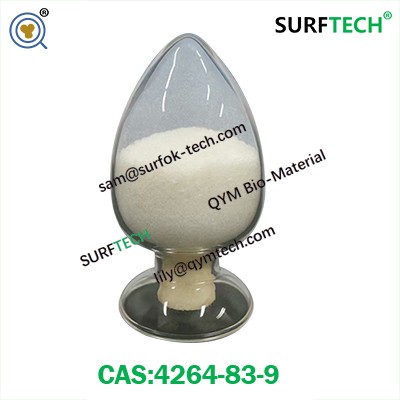
Selecting the right ALP substrate is a strategic decision that affects every aspect of IVD kit performance — from sensitivity and reproducibility to manufacturing cost and regulatory approval. For colorimetric ALP detection in clinical diagnostic applications, 4-Nitrophenyl Phosphate (p-NPP, CAS 4264-83-9) offers the best combination of sensitivity, stability, consistency, and cost-effectiveness. By choosing a high-purity, IVD-grade p-NPP substrate from a trusted manufacturer, you can ensure that your assay kit delivers reliable, reproducible results that clinicians can trust.

 English
 Español






 IPv6 network supported