Leave A Message
If you are interested in our products and want to know more details,please leave a message here,we will reply you as soon as we can.

At QYM/SURFTECH, we are dedicated to providing high-purity, reliable, and cost-effective core raw materials—along with comprehensive solutions—for the biopharmaceutical sector.
Today, we’d like to introduce our production process for recombinant autoimmune antigens.
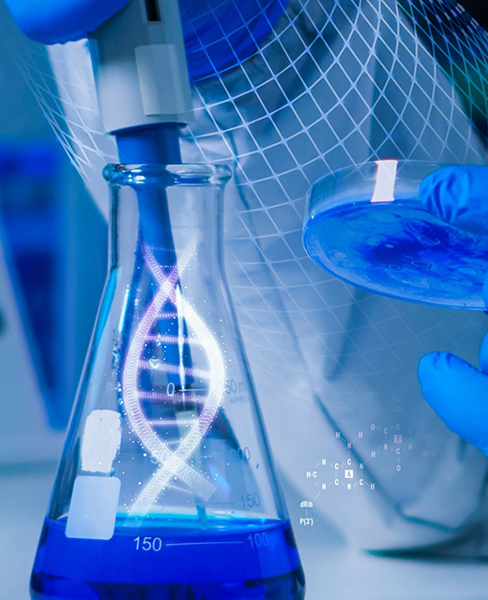
In vitro recombinant expression uses genetic engineering to insert target nucleic acid sequences into vectors—such as plasmids or viruses—creating recombinant genetic material.
Once introduced into host cells, it enables stable expansion and protein expression.
Today, recombinant expression has become the primary method for protein production.
The most widely used expression hosts today include Escherichia coli, Pichia pastoris, the insect cell Bac-to-Bac system, and mammalian cell lines like CHO and HEK293.
Choosing the right host depends on the protein’s unique properties, its intended downstream applications, and the required expression yield. Selecting the optimal expression system directly increases the overall success rate.
When developing IVD antigen raw materials, in vitro recombinant technology—backed by rigorous assay design and performance evaluations—yields recombinant proteins that closely match the structure of native antigens.
This approach not only supports the development of calibrators, controls, and reference materials for IVD assays,
but these proteins can also serve as immunogens for antibody generation. As a result, it effectively overcomes the scarcity and extraction hurdles of native antigens—driving innovation in antibody development and enabling next-generation diagnostic platforms.
Leave A Message
Scan to Wechat :

Scan to WhatsApp :

 English
 Español


 IPv6 network supported