- Quick Answer: The Dual-Gating Framework for Glupa-C Qualification
Evaluating L-γ-Glutamyl-3-carboxy-4-nitroanilide ammonium salt(Glupa-C)quality requires a strict dual-gating framework tailored to satisfy both analytical chemistry standards and international regulatory compliance:
1.R&D Critical Specs focus on:
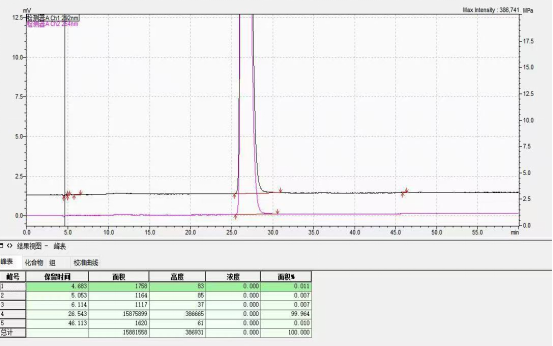
2.Purity Glupa-carboxylate(HPLC)>99%, (QYM/SURFTECH can supply≥99.6%),
3.Impurity 5-Amino-2-nitrobenzoate (HPLC)<0.1%,(QYM/SURFTECH can supply <0.1%)
4.Water(K. Fischer)<6%,(QYM/SURFTECH can supply <6%)
Controlling these boundaries is non-negotiable to fully eliminate reagent blank (RB) drift and guarantee an 18-month shelf-life for liquid-stable GGT R2 reagents.
Procurement Critical Specs: Demand an ISO 13485 or GMP certified manufacturing source, valid Animal Component-Free (ACF/AOF) statements, a formal Change Control Procedure (CCP) for EU IVDR Annex IX compliance, and a bulk lot-locking policy (QYM/SURFTECH over 10kgs) to eliminate internal lab re-validation overheads.
Executive Summary: The Stabilization Dilemma in GGT Assays
In clinical diagnostics, GGT is a critical biomarker for hepatic, biliary, and pancreatic disorders. Following the International Federation of Clinical Chemistry (IFCC) reference methods, Glupa-C (CAS:63699-78-5) has become the gold-standard diagnostic substrate for kinetic GGT spectrophotometric assays.
However, formulating a liquid-stable, ready-to-use (RTU) GGT diagnostic kit poses a severe stability challenge. Because Glupa-C is highly prone to spontaneous hydrolysis in aqueous solutions, the chemical integrity of the raw substrate dictates the commercial viability of the reagent.
For R&D Engineers, a sub-optimal substrate causes catastrophic Reagent Blank (RB) drift, destroying low-concentration sensitivity and clinical accuracy.
For Procurement Managers, non-traceable suppliers present high regulatory risks under current EU IVDR and global regulatory frameworks.
This technical guide provides an actionable blueprint for qualifying Glupa-C vendors across both technical performance and commercial risk management.
- R&D Perspective: The Four Key Technical Indicators for Glupa-C Validation
1. High-Purity Profile via HPLC ( >99%).
QYM/SURFTECH can supply Glupa-C at Purity Glupa-carboxylate(HPLC) ≥99.6%.
The baseline requirement for diagnostic-grade Glupa-C is an HPLC purity of over 99%. Generic chemical traders frequently supply "laboratory-grade" reagents with 97% or 98% purity. On automated clinical chemistry analyzers (such as Beckman Coulter AU, Roche Cobas, or Abbott Alinity), these uncharacterized trace impurities act as optical background blockers, scattering light paths and altering kinetic spectrophotometric readings at 405 nm. A highly uniform crystalline structure ensures a linear, predictable reaction rate when cleaved by the target serum GGT enzyme.
2. The Lethal Impurity: Free 5-Amino-2-nitrobenzoate Limitation ( <0.1%)
QYM/SURFTECH can supply Glupa-C at 5-Amino-2-nitrobenzoate <0.1%.
The most critical quality metric is the concentration of Free 5-Amino-2-nitrobenzoic acid . Free 5-Amino-2-nitrobenzoate is the direct degradation byproduct of Glupa-C self-hydrolysis.
The Mechanism: If the raw substrate contains >0.1% Free 5-Amino-2-nitrobenzoate at the time of formulation, the liquid R2 reagent will exhibit an elevated baseline absorbance from day one. Over a typical 12-to-18-month shelf life, this initial degradation triggers autocatalytic cleavage, causing rapid reagent blank drift.
The Clinical Consequence: When the automated analyzer calibrates, a high blank absorbance reduces the system’s signal-to-noise ratio. Consequently, the test loses its Limit of Detection (LoD) and Limit of Quantitation (LoQ), making it impossible to accurately measure low-concentration GGT samples in patients with early-stage liver disease or fatty liver regression. Top-tier manufacturers must guarantee Free 5-Amino-2-nitrobenzoate strictly 0.1% (ideally<0.05%) via validated HPLC gating.
3. Moisture Content & Crystal Longevity ( <6%)
QYM/SURFTECH can supply Glupa-C at Water(K. Fischer)<6%.
Water content must be strictly controlled at <6% via Karl Fischer (KF) titration. Glupa-C ammonium salt is highly hygroscopic. If the bulk packaging allows moisture penetration, solid-state hydrolysis initializes inside the fiber drum during warehouse storage. Excess moisture distorts the stable crystalline lattice, accelerating the transition of the highly soluble ammonium salt back into its poorly soluble free-acid form, destroying the material before it ever enters the compounding tank.
4. Alkaline Buffer Solubility & Optical Clarity
The physicochemical properties of QYM/SURFTECH Glupa-C itself determine its excellent water solubility.
Industrial formulation requires rapid dissolution in alkaline biological buffering systems. Premium-grade Glupa-C must achieve complete, clear dissolution within seconds, leaving zero turbidity or micro-precipitates. Any residual cloudiness scatters the light path on-board, introducing false positive rate-of-change signals during kinetic monitoring.
- Procurement Perspective: Three Red Lines for Supply Chain Security
1. ISO 13485 or GMP Certification & IVDR Technical Dossiers
QYM/SURFTECH production base has ISO 13485 and follow GMP standard to R&D and produce Glupa-C,we also cooperate with our customers to supply reference IVDR documents.
Under the European Union’s In Vitro Diagnostic Regulation (EU IVDR 2017/746), raw material traceability is heavily audited. Procurement teams can no longer source critical substrates from unverified chemical brokers. The source manufacturer must operate under an ISO 13485:2016 Quality Management System. Suppliers must provide a comprehensive Regulatory Support Package (RSP) containing:
A detailed chemical synthesis pathway and impurity profiling.
A certified Animal Component-Free (ACF / AOF) statement to eliminate BSE/TSE transmissible spongiform encephalopathy risks.
A legally binding Change Control Procedure (CCP) guaranteeing zero changes to the manufacturing process or raw material origins without a 6-month prior written notification.
2. Single-Lot Scaling & Extended Lot-Locking Policies
QYM/SURFTECH can produce single batch max. at 10 to 15kgs Glupa-C.
Every time an IVD plant transitions to a new raw material lot number, the R&D lab must halt routine operations to run exhaustive cross-validation, matrix correlation testing, stability benchmarking, and instrument re-calibration. This operational downtime costs thousands of dollars. Procurement must align with a manufacturer capable of producing single-lot batch sizes of kgs and offering a 12-month free lot-locking policy. This allows mid-to-large IVD facilities to run an entire year’s production on a single, uniform batch, reducing validation overheads to as less as it can.
3. Climate-Defending Thermal Logistics
Glupa-C bulk powder is sensitive to prolonged thermal stress. Intercontinental transit during summer months can expose cargo to cargo-hold temperatures exceeding 40℃, initializing solid-state degradation.
QYM/SURFTECH are equipped with professional small refrigeration equipment and cooperate with pharmaceutical-grade cold-chain warehouses for storage, meeting the requirements for long-term and bulk preservation of products.We use ice packs and custom foam boxes to maintain proper short-term temperature control and partner with professional cold-chain logistics providers to ensure reliable, time-efficient transportation.

 English
 Español






 IPv6 network supported